
Thursday, May 28, 2015


Wednesday, May 27, 2015
Gosh Darn It Wednesday PM
Hey Folks, if it weren't for this Gosh-Darned job and working late I'd have more time to devote to my favorite hobby . . .





Tuesday, May 26, 2015


Conner Habib: Why Are We Afraid To Talk About Gay Porn?
I'm always finding interesting stuff a couple years after it's posted . . .
http://www.buzzfeed.com/connerhabib/why-are-we-afraid-to-talk-about-gay-porn#.gp1YaB88w
Why Are We Afraid To Talk About Gay Porn?
After I was invited by a student group at Corning Community College to give a talk on sex and culture, my presentation was canceled when the school’s president found out that I do porn. This is exactly why we need to have more candid conversations about sex, porn and American culture.

Conner Habib
BuzzFeed Contributor
posted on Mar. 20, 2013, at 6:11 p.m.

Conner Habib Joe
Mazza
Corning, New York.
Find it on the map: it hovers just above the Pennsylvania border, a long ways
away from the two closest places you’ve heard of, Syracuse and Rochester. Like
the small town I grew up in, it’s all alone.
Two months ago, I was
approached by a curious and thoughtful group of students from Corning Community
College. The students, including members of the school’s LGBT organization,
invited me to speak at the school as part of their upcoming sex-positive
community event, Sex Week. Other events during Sex Week include a Q&A about
sex toys, and a discussion about pleasure and communication by members of
Planned Parenthood and the Rape Crisis center.
In small towns like
Corning, the loneliness that LGBT people can feel — for lack of community,
peers, and resources — can sometimes be transformed into determination. When
people from small towns feel like the discussions they want to have are absent,
they work to create them. Their town and school, the students told me, needed
more open discussions about sex, about LGBT issues, so they were going to make
it happen.
I agreed to be a part
of it, and administrators signed my speaker’s contract shortly
thereafter.
Last week, I was
informed by Corning Community College Vice President and Dean of Student
Development, Don Heins, that the school’s president, Katherine Douglas, had
singled out my talk and decided to cancel it, against student wishes. They
agreed to honor the contract (which they’d signed off on and which contained a
cancellation fee), but they were worried that the talk would be “controversial.”
I wasn’t scheduled to speak about porn, but to talk more broadly on sex and
culture. The reason I was banned was because she’d changed her mind after
discovering that I was not, as she’d thought, an educator who used to be in
porn, but rather a university instructor before I started appearing in adult
films.
I was told she
stated, emphatically and more than once, that pornography cannot and should not
be linked to LGBT rights.
When I communicated
with frustrated students, I told them that I’d consider coming anyway and that I
could work on finding another venue if they were interested. Then I was informed
that administrators contacted a local hotel and local businesses to make sure I
wouldn’t be coming to town, that a student was pulled aside and told not to give
direct comments to the press, that the president wanted to schedule her own talk
to tell students about why she canceled my appearance, and that if I were to
appear in the town of Corning, students were not to attend my
lecture.
In an miniature echo
of pornography’s place in culture, where millions of people watch and want
pornography but are told not to want it, not to watch it, the students and
community — particularly the LGBT community, which was singled out in the
president’s reasoning — were told not to want or hear a discussion that they’d
asked for. The school had undone the work and determination of the LGBT
community. What could be left but loneliness? I started to hear from and receive
emails about students — in the LGBT community and otherwise — expressing their
frustrations, and saying they felt threatened and intimidated by the
administration.
So — are porn and
LGBT rights connected?
It is precisely the
small towns and conservative or isolated areas of our world that expose how
intertwined they are.
Where I grew up, just
outside of Allentown, PA, I watched, right through my adolescence into adulthood
and early college years, while straight people paired off and experienced sex.
They were able to engage with a basic aspect of human life that seemed
unavailable and distant to me. Unlike today, there was no discussion about gay
marriage, nor were there many gay characters on TV. But even if there had been,
neither would have rounded out my experience as a man with homosexual feelings
because so many of those feelings were — unsurprisingly for a young man —
sexual. Gay sex was a lonely venture. It wasn’t easy to find, and was only
mentioned in slurs and the butt of jokes. “Cocksucker” and “butt fucker” were
insults; stand-ins for “faggot.”
Whether I bought it
from the adult video store or, later, downloaded it, gay porn helped me
encounter positive images of gay men enjoying the act of sex. Gay porn was a
window into gay sexuality that was free of shame and guilt, and revealed a
different world where sex wasn’t a lonely prospect, confined to the shadows or
just my imagination.
This same concern is
amplified in places where homosexuality is criminalized or even punishable by
death.
As a porn performer
of Arab descent, I’ve received hundreds of emails from men in Middle Eastern
countries expressing gratitude and relief for my having portrayed gay sex in a
positive light on camera. When a gay man lives somewhere where his identity is
threatened, it’s clear how sex - including pornography - and sexuality are
intertwined. His sexual imagination, which is criminalized, matches the sexual
images of gay pornography (which are also criminalized). Since acting out his
imagination through sex would be to risk his life, the access to the images is
safer. The images, created by gay men wherever it’s legal to create them,
provide empowerment and diminish alienation.

Men at
Play
As a young gay man,
porn stars became heroes of mine, joining authors, punk rock musicians, and
leftist political thinkers, because they lived as I wanted to. Without them, I
would have only had a partial picture of my life - a thinking and creative one,
perhaps - but one that ignored my sexual thoughts and imagination which were
constantly activated and in motion.
To deny the
importance of images of gay sex while pretending to affirm gay rights, as
Katherine Douglas does, is a luxury, and it’s dangerous one. It’s the equivalent
of cheering on a powerless gay neighbor in a 1990s sitcom, or to say, “I don’t
care what anyone does in the privacy of his own home, but don’t bring it out
into public.” In other words, it’s not an effort to understand gay men as whole
human beings but to merely establish sexless caricatures of them to feel
comfortable about.
Evidence for the link
between gay rights and gay porn can be found in the broader acceptance of
pornography in gay culture. Many gay porn stars lend their support to LGBT
charities and causes. And when gay sex was heavily legislated against, gay porn
stars by definition broke the law to express sexual freedom and defend their
sexuality.
That said, I must
also express here that I don’t expect allies to understand gay pornography, its
link to LGBT movement, or my involvement with it automatically, or as quickly as
some gay men do. When Don Heins called me and stated that Katherine Douglass
canceled the talk because she had concerns about the controversial subject on
campus, I told him that I understood those concerns. They are serious and real
concerns - if they weren’t, I’d have no need to give talks, after all. I have
similar and additional concerns in my own life: How will having done porn
intersect with my other interests? How can I pursue porn and speak openly about
sex without making other people feel alienated? What have I noticed about the
porn industry that I find supportive of or a hinderance to freedom —
particularly for LGBT communities?
As of the writing of
this article, I’m scheduled to speak at the Southeast Steuben Library in Corning
on March 21st, at an event not endorsed by or related to the school. If that
venue is somehow blocked, I’ll speak in someone’s house. Because the question
here isn’t whether or not we have concerns, but whether or not we have the
courage to address them.
Porn, a form that has
been with us for thousands of years and which deeply intertwines with all
cultures, deserves deep and serious thinking, not off-the-cuff dismissal and a
silencing of public discussion.
This is especially
true when it comes to how porn relates to gay men’s lives. To be an ally to gay
men, and by extension the LGBT movement, doesn’t only mean being comfortable
with gay men’s sexual orientation, it also means being comfortable with their
orientation to sex. This is why, when someone claims to be an ally of gay men,
pornography exposes – just as surely as it exposes naked bodies — where they
really stand.
# # #


Monday, May 25, 2015


Sunday, May 24, 2015
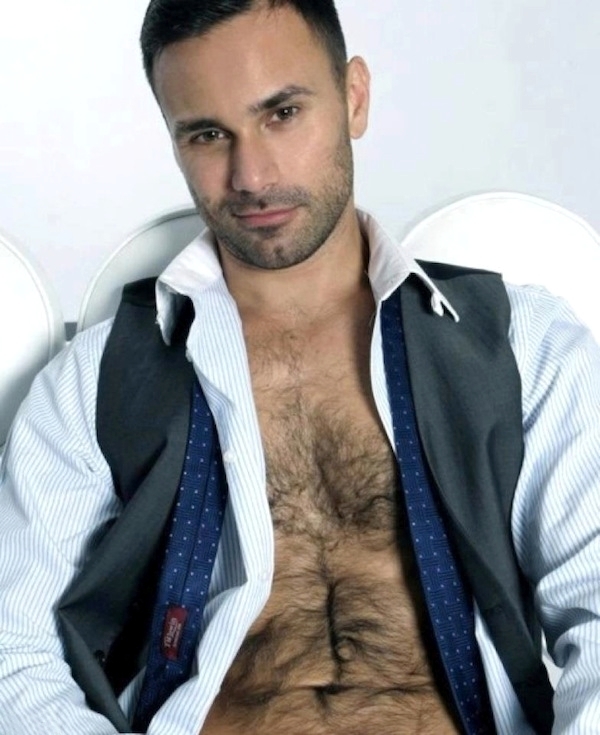
The GOOD MEN PROJECT: Keep the Rug
An Appreciation of Male Body Hair
http://goodmenproject.com/featured-content/keep-the-rug-an-appreciation-of-male-body-hair/
Paula Russel makes a strong case for the appeal of a natural, hirsute hunk.

Chest hair removal harkens back to ancient Egypt, where hair removal was common to protect against fleas, lice and other infestations. In ancient times, lack of body hair was often indicative of civility, with ancient Greek men removing their body hair to appear more youthful and refined, and ancient Egyptian priests practicing hair removal in order to present a pure image to their gods.
Male body hair removal was less common in Europe, as body hair was generally accepted in early Christian Europe and even considered lucky by certain groups, such as Jewish Europeans in the Middle Ages. For the longest time, body hair simply wasn’t an area of concern for European men. The influence of Europe in global fashion trends helped hairier men to be seen as sexy throughout the 1960s and 70s.
In contrast to the mild popularity of hairless chests in American films in the 1950s, such as Marlon Brando’s in A Streetcar Named Desire, European productions showed masculine chests in all of their hairy glory. Sean Connery and his furry torso on the beach in the very popular James Bond film Dr. No helped usher in a fantastically hirsute era in which the Burt Reynoldses, Tom Sellecks and Alec Baldwins of the world could bare their sexy man-rugs without shame.
Sadly, a recent poll suggested that these days, 49% of women prefer hairless chests. Part of me wonders how this preference has evolved. Like many of the pressures put on women and their bodies, this figure is undoubtedly heavily media-influenced. The late 1980s ushered in another era of hairless chests – from the covers of Harlequin Romances to a hairless Sylvester Stallone slugging out an equally hairless Dolph Lundgren in Rocky IV, to a hairless, shirtless and ripped Brad Pitt in Thelma and Louise or Fight Club in the 1990s. Thus began a pervasiveness within the media of hairlessness as the new norm. It is rare that one sees a chest these days with much more than a treasure trail adorning it.
A couple of years ago, a friend of mine confessed to shaving his chest frequently. He said it started when he started to read GQ and saw how different he looked from most of the men in the magazine. He’s an attractive, muscular guy, but felt hopelessly inadequate because of his body hair. I laughed at him at the time and made fun of him for being a metrosexual, but looking back on the experience, I regret teasing him. His shaving wasn’t a result of metrosexuality, but a response to the way men are now taught that they need to look. While the media’s unrealistic expectations of women is well-known and questioned within feminist communities, we need to also address the pressure put upon men to look a certain way.
Men shouldn’t be ashamed of their body hair, just as women shouldn’t be ashamed that they’re not necessarily a size two. Your body hair is a part of who you are and it’s not worth being self-conscious about it. Whether you have a hairy chest, a hairy back, or only a patch of fuzz in the centre of your chest, you’re sexy. Nothing feels better than lying next to you and stroking your manly chest hair.
I beg the men out there to stop shaving, waxing and plucking your excess hair. The modern media might not encourage your body hair, but it is sexy and natural. Men need to start questioning the media’s portrayal of male body hair and accepting themselves for who they are.
GOOD MEN PROJECT ARCHIVES:
http://goodmenproject.com/category/gender-sexuality/gay-bisexual-men/
* * * * *

ASK AN EXPERT
From an evolutionary standpoint, why is it beneficial for men to have facial and chest hair? — Tash
If you look at some of our relatives, we primates are a fairly hairy bunch.
Primates tend to have all sorts of interesting facial and sometimes even shoulder hair, so humans are not odd in this regard, says anatomist Professor Ian Gibbins from Flinders University.
In fact, Gibbins suspects it wasn't that long ago that we sported a pretty impressive fur coat of our own. The evidence for this comes from goosebumps.
But evolution is usually pretty prompt at getting rid of features we don't need, says Gibbins, so the reason men still have facial and chest hair is more likely due to sexual selection.
At some stage while we were losing our excess body hair either women found hairy men more attractive, or men preferred non-hairy women.
"The usual argument," says Gibbins, "is that [sexual selection] is some sort of surrogate for your overall fitness."
"So if you're a good enough feeder or hunter or breeder, or whatever it is, to have enough energy in reserve to make some flashy show then it means you're probably ahead of the pack."
Basically if you're a very hairy man and hairy men are in, you get the girls.
However there are some caveats to this argument.
Firstly, hairiness can vary quite dramatically between different ethnic groups, so to make general statements about male hairiness is fairly difficult. For example, men from a Mediterranean background generally have darker and thicker hair, whereas men of Asian descent often don't have much facial hair at all, says Gibbons.
Secondly, men and women have approximately the same number of hair follicles, what differs is the coarseness of the hairs.
We have two types of hair on our bodies: the coarse, usually pigmented terminal hair which includes our head hair, pubic hair and for men their facial and chest hair; and the finer, less visible vellus hair.
Hair growth and size is modulated by hormones, in particular androgens like testosterone, which kick in during puberty. As men generally have higher levels of testosterone than women they tend to have more terminal hair. Testosterone also increases the size of hair follicles on men's faces at puberty so that they begin to grow visible beards.
While the rise of the metrosexual have seen growing numbers of men shave, wax and laser their way to less facial and chest hair, Gibbins says don't expect a hair-free man to evolve anytime soon.
"Evolution is much too slow for that sort of quick cultural stuff," he says.
In fact, manscaping is more likely to subvert evolution than help it along.
"It's a classic example of cultural aspects completely overriding any evolutionary pressures," says Gibbins.
Men who are unable to grow hair may be a bit jealous of those can do so easily. I have also realized that genes and culture have a lot to do with the amount of hair on a man. It’s a shame women force their men to undergo desperate means to rid them of what nature gave them to prove their manhood.
Goosebumps: evidence of our hairy past?
"Since most of our hair is so thin nothing much happens except the goosebumps. However, if we had more substantial fur in our follicles, like a cat or a guinea-pig, then this action would fluff up the hair," says Gibbins.
Cats use piloerection to trap air in their fur when they're cold, and to make themselves look bigger when they're under threat.
Humans still have a complete set of neural pathways for both these responses which suggests we were using our piloerection system properly until sometime fairly recently in our evolutionary past, says Gibbins.
So when you next get a 'chill down your spine' just imagine how scary you'd look with all your hair standing on end!
Professor Ian Gibbins was interviewed by Suzannah Lyons.


Subscribe to:
Posts (Atom)