Saturday, March 10, 2018

Saturday PM


Okay, something I've never thought about


Maybe this is why I had no interest in "The Shape of Water."


https://www.huffingtonpost.com/entry/the-shape-of-water-malcolm-brenner-dolphin-sex_us_5aa17482e4b0e9381c169b7a


A Review Of ‘The Shape Of Water,’ From A Guy Who Had Sex With A Dolphin

“I find a dolphin a lot more sexy than that thing was,” said Malcolm Brenner.

By Ashley Feinberg

In 2010, journalist Malcolm J. Brenner released his autobiographical novel, Wet Goddess. A few years later, Brenner was the subject of an award-winning documentary, “Dolphin Lover.” Both works explore a period in the 1970s for which Brenner became famous — the time he fell in love with and ultimately made love to a dolphin named Dolly.

As he was rocketing toward a sensational sort of renown, Brenner also became the subject of a number of think pieces and interviews. But the internet’s metabolism is quick, even when inter-species dolphin sex is involved, and Brenner’s name slowly faded from the national conversation.

Then, Guillermo del Toro made “The Shape of Water,” a movie about a mute woman who falls in love with and ultimately makes love to a strapping humanoid amphibian, and it won the Best Picture Academy Award this past Sunday. I immediately thought of Brenner.

In 1970, when Brenner was a college sophomore, he was given open access to the now-defunct theme park Floridaland near Sarasota to take photos for a book about the dolphin show. There, he claims, Dolly the dolphin began courting him.

“She would rub her genital slit against me,” he says in “Dolphin Lover.” “And if I tried to push her away, she would get very angry with me. One time, when she wanted to masturbate on my foot and I wouldn’t let her, she threw herself on top of me and pushed me down to the 12-foot bottom of the pool.”

After some time, Brenner and Dolly consummated their relationship — he vertical, she horizontal — but Brenner eventually moved away and Dolly was sent to an aquarium in Mississippi, where she later died.

Brenner is a thinking person’s zoophile. He draws a careful distinction between zoophiles and mere bestialists, noting in “Dolphin Lover” that the latter “might just have sex with an animal and walk away,” while the former “is someone who has tender or caring emotions for their animal partner.”

He doesn’t think anyone is necessarily born with these particular sexual proclivities. That runs counter to the dogma of a number of other zoophiles. In the documentary, Brenner explains that he believes his zoophilia is the result of the “very intense physical and sexual abuse” he claims to have suffered in early childhood at the hands of psychologist Albert Duvall, a student of the controversial psychoanalyst Wilhelm Reich. “I think I found animals to be a safe and secure repository for my sexual desires,” he says in the movie.

Brenner also draws parallels between current anti-bestiality laws and the anti-miscegenation laws of the 19th and 20th centuries because, as he says in the documentary, “150 years ago, black people were considered a degenerate sub-species of the human being. ... And I’m hoping that in a more enlightened future, zoophilia will be no more regarded as controversial or harmful than interracial sex is today.”

“The Shape of Water” likewise frames its interspecies romance in social-justice terms. Perhaps, I thought, Brenner considered the movie a personal triumph, a sign that zoophiles are at last gaining acceptance in the mainstream.

Brenner, as it turned out, had not seen the film, but he was happy to watch it for the purposes of our discussion, which took place over the phone and via Facebook. The conversation has been lightly edited for grammar and continuity.


So, what’d you think?

My overall impression is it was an unabashedly romantic fantasy.

How so?

Oh, the whole setting. The elaborately evil and oppressive institution, the notion of a couple of washerwomen going up against big whatever-it-was, big military, I guess. This godlike fish being that is ugly in a beautiful sort of way — or beautiful in an ugly sort of way. I thought they did a very good job of conveying that. I found myself alternately attracted and repulsed by him. And the way the whole romance developed, I thought it developed much too quickly.

You know, even though he had mangled one human being, it just seemed like she felt he had a heart of gold from the beginning. It was a very stereotypical romance. I thought it went more back to “Splash” with Daryl Hannah and Tom Hanks, like a female version of “Splash.” It didn’t have much to do with my book, which I think of as journalism passing as a novel.

Do you think the fact that the creature in the movie was in captivity changed the nature of the relationship at all?

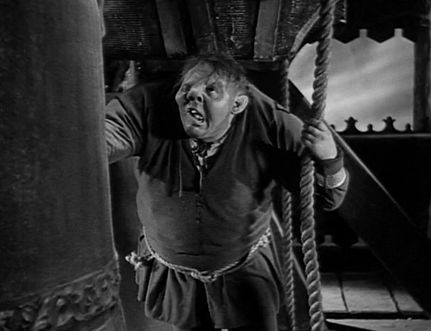
Well, the captivity was so patently cruel and sadistic. I don’t think you can compare it to much in the way of the captivity of marine mammals — at least what I’m familiar with, outside of some places like Indonesia or Russia, where they still have traveling dolphin shows. In fact, there’s one scene where the creature is shackled down and he looks like Charles Laughton in “The Hunchback of Notre Dame.” That’s a little cinematic giveaway there.

There is the parallel between the fact that both Elisa and the creature are mute. Although, the creature certainly manages to express itself.

Yeah, it actually reminded me a lot of how you wrote that there was a telepathic connection between you and the dolphin.

The thing about that is, if you’re a rational, or more or less rational, human being and you start thinking you’re having a telepathic communication of any kind, you doubt your sanity. I think the only thing that was in any doubt was whether the creature could actually communicate or not. And the only guy who did doubt it was the bad guy, what was his name, I forget. [It was Richard Strickland.]

I thought it was a good movie, it was enjoyable. I thought it was a little long, especially toward the end. A flaw of a lot of modern movies, I think. They’d be better off if they could stick to 90 to 100 minutes.

A lot of people have focused almost entirely on the fact that the movie depicts Elisa having sex with this fish man. I’m just curious what your reaction to that is.

Given the course of the development of their relationship, it seems sort of natural. Although I must say, I find a dolphin a lot more sexy than that thing was. Then again, I’m not Elisa. Maybe you have to take it where you can get it.

But to me, the fact that this won Best Picture, that’s just astonishing. It just shows to what degree it really is fantasy.

Why do you say that?

Because I don’t think … There was a documentary made a couple of years ago ― I’m trying to remember what the name of it was now, I think it was “Zoo.” And it was about this incident where this Boeing engineer went out to this zoo farm in the country and got buggered by a stallion and died. And though that was a very artsy movie in the way it dealt with the subject, it was still, I think, a quadruped.

As long as, apparently, the object of your desire is a featherless biped, we’re not going to let a few gills or scales stand in the way of true romance, seems to be Hollywood’s dictum. Quadrupeds? No. Animals with flukes? No. But if it looks like a man …

You said you find dolphins a lot sexier. Is there any specific quality about dolphins that’s more appealing to you than what was in the movie?

Let’s face it, the whole concept of a gilled man comes from the fact that they didn’t have CGI in the 1950s when they wanted to make “Creature From the Black Lagoon.” They had to use a guy in a rubber suit. This dictates a sort of anthropomorphic form to the creature. A dolphin’s form is non-anthropomorphic. They don’t have any legs. Their limbs are flippers. Their nostrils are a blowhole on top of their head. Their buttocks have become powerful flukes, and they can swim at 20 miles per hour. They are the most radically divergent and one of the oldest of all mammal species from the main mammal line. They’re sleek. They’re smooth. They are interested in us, usually.

And they can be, if they want to be ― as I found out with Dolly, the dolphin that turned into the character Ruby in Wet Goddess ― they can be very discriminating and very, very delicate and gentle with a human being. When she would open her mouth and run her teeth very lightly along my arms and my legs, the hair on the back of my neck stood up. I mean, it was amazing. And to have gone through this whole process of where she started out expecting me to respond like a male dolphin would, until it finally had somehow gotten through to her that she had to be more gentle with me, and to see her respond in that way was haunting. It was haunting. That is the kind of intelligence at work in the dolphin mind.

I don’t know to this day and I refuse to speculate about why she might have wanted to have sex with me or a human being in general, but somehow she devoted a lot of attention to me. And over time I came to find it flattering, especially when nobody else was paying any attention to me. So I can understand how Elisa in the movie felt.

Does the fact that Dolly was a female have anything to do with your attraction to her? Do you think you’d be attracted to male dolphins?

No, I wouldn’t be sexually attracted to male dolphins. As an adult, I’m heterosexual, although I cross species lines. As a teenager, as I wrote about in my memoir, there was a time in my life where I was jerking off to the family dog, a male poodle. But it wasn’t because I was gay. It was because his excitement got me very excited, and I found it pleasurable for both of us. If the female poodle had been as responsive as he was, I probably would have been boinking her.

For you, personally, would the presence of humanlike features change your level of attraction?

I think it would, because I’m not attracted to furry art, which combines anthropomorphic and animalistic qualities. What I was really attracted to was her attention and the intellectual ways she challenged me, not her appearance.

You said, “To me, the fact that this won Best Picture, that’s just astonishing. It just shows to what degree it really is fantasy.” I was wondering if you could elaborate on that a little more. Do you think that if the relationship had been depicted as less fantastical, people would have been less accepting?

Oh, yeah, definitely. The closer something comes to bestiality in a person’s mind, the more it’s going to be rejected in the typical case. Guillermo carefully set up a very fantastic atmosphere for the film with very realistic elements in it, like Elisa’s life. That whole laboratory that the women work in is a fantastic fantasy. Most marine research labs look nothing like that.

I’m sure a lot of the good liberals who criticized me for making love with a dolphin loved this film because the hero was a featherless biped. If “the asset” had been a dolphin, it wouldn’t have been anywhere near as popular.

Does it bother you at all that people only seem to find this acceptable when it’s fantasy or an allegory? And do you think there will be a day when that changes?

Of course it bothers me. I don’t like people threatening to go Lorena Bobbitt on me because I made love with a dolphin.

Will it change? Who knows? I would like to think that society will become less religious, because the prohibitions in Leviticus are the only conceivable basis for any laws against bestiality. I can’t see that my boffing my dog has any effect on society, good or ill, as long as I’m not hurting her or abusing her. Laws against animal cruelty ought to be sufficient without criminalizing the act of interspecies sex, which organizations like PETA are trying to do.

Do you see this movie as a step toward acceptance at all?

I don’t see it as a step toward acceptance. It’s so obviously a fantasy that most people won’t carry the goodwill over to zoophiles like me. Ask me again when I’ve signed a film contract for Wet Goddess. But I want to be clear about one thing: I didn’t write Wet Goddess for zoophiles. I wrote it for dolphins.

Did you see any of the other movies that were up for Best Picture?

I don’t get out to the movies much.

Is there anything else in particular that stuck out to you about “The Shape of Water”?


I very much like the fact that the academy decided to give Best Picture to a movie with women’s breasts in it. I thought there was nothing inappropriate with that, given the story. You know, it’s probably much more salacious to have the suggestion of a woman having sex with a sea creature than seeing her tits.


Fantasy Juxtaposition 3,247


Have a Great Weekend Pic of the Day


Friday, March 9, 2018

Friday PM


STOP “COMING OUT” AS CONSERVATIVE


https://bisexual.org/stop-coming-out-as-conservative/

STOP “COMING OUT” AS CONSERVATIVE


Blaize Stewart
2/8/2018

Even though it was over three years ago, I can still recall with perfect clarity the moment I came out as bi; I was physically shaking, hyperventilating and choking through tears to get the words out to my family. It is a moment I will never forget, because in that instance my life changed forever. All of the fear, doubt, secrecy, anxiety and depression that I carried with me while being in the closet started evaporating right then and there and, in spite of the hyperventilating, I felt like I could finally breathe for the first time in years.
For me it was a momentous occasion; I’m not saying the coming out experience is as profound for every LGBTQ+ person, but I think it’s safe to say that for the majority of this community, coming out is an important milestone in finding personal acceptance.
It can take years to work up the courage to take this step; upon taking it, you have to accept the fact that there will be some level of change in your life after those words come out. They can be small or big changes, positive or negative, but changes will come nonetheless. Even though this process is often a difficult one, research has shown that LGB folks who are out have lower levels of stress hormones and suffer less depression and anxiety.
I always enjoy when I see or hear of someone coming out. Whether it’s in person or through social media, it’s nice to be able to offer a word of congratulations or, if the coming out process is going poorly, provide advice or encouragement to the person in need.
However, in our current tumultuous political climate, I have started seeing another type of coming out story; those who have “bravely” decided to come out as conservative.
Every time I see one of these articles pop up I cringe; the audacity of these people to take an important moment in an LGBTQ+ person’s life and turn it into a cheap political joke is astounding. Not only are they being insensitive to this experience, but also showcasing a severe lack of understanding and empathy for those in the LGBQ+ community who go through this often painful and difficult process.
The most glaringly obvious issue is that being gay, bi, trans, asexual, etc. is not a choice; being conservative is. Those who choose the conservative route get to look at information on issues and make their own decision based on the facts (or whatever they deem to be a fact), which is a far cry from being born into a society that shuns and judges you for something that is beyond your control.
Quite frankly, I do not feel bad for you in the slightest if you are a conservative and you feel judged; honestly, one would think that might make you a feel a little bit of empathy for the communities that social conservatives are continually marginalizing. Yes, there are different ideas and definitions of conservatism, but it is still a choice. You are not “coming out.” You made a choice of what kind of people, policies, and paths you want to support that was (hopefully) made by utilizing all available information and expecting sympathy for the result of these choices is ridiculous.
Don’t play the victim and compare your situation to that of those who legitimately had no choice in how they were born and, through coming out, can finally find happiness and acceptance. The fact of the matter is that you made a choice to be conservative, so grow up and accept that responsibility and leave the coming out process for those who actually need it.

Mostly Straight?


Hmmm . . .


http://time.com/5026092/mostly-straight-sexual-identity-bisexual-gay/

Why ‘Mostly Straight’ Men Are a Distinct Sexual Identity

By RITCH C. SAVIN-WILLIAMS
Updated: November 20, 2017 | Originally published: November 16, 2017

Savin-Williams is a professor emeritus of development psychology at Cornell University and the author most recently of Mostly Straight: Sexual Fluidity Among Men.


We hear a lot about the Big Three Sexualities — straight, bisexual and gay. Most of us assume that these three orientations encompass the universe of sexual identities. But there is a new kid on the block: The mostly straight male.

To the uninitiated, mostly straight may seem paradoxical. How can a man be mostly heterosexual? If you’re a young man, you might assume that either you’re straight or you’re not, meaning you’re likely gay and maybe bisexual. Yet the evidence suggests that more young men identify or describe themselves as mostly straight than identify as either bisexual or gay combined.

A 2011–2013U.S. government poll found that among 18- to 24-year-old men, 6% marked their sexual attractions as “mostly opposite sex.” That’s nearly 1 million young men. Yet when these men were forced to choose between straight, bisexual or gay, about three-quarters marked straight because for them bisexual, even if it is understood as “bisexual-leaning straight,” is too gay to accurately describe their identity. Given such constraints, these young men were left with no place to truthfully register their sexuality, thus forcing them to be less than honest.

For my book, I spoke with 40 mostly straight young men, some over the course of several years. They were a very diverse group. In high school, they were hipsters, jocks, nerds, druggies, skaters, class clowns, burnouts and straight-laced achievers. Long hair, short hair, clean-shaven, bearded, tattooed, pierced, muscular, lanky, hyper and pudgy. They wanted to change the world, fit in, drop out, go into medicine, advocate marketing strategies, fight for social justice, write novels or be unemployed, and many have no clue what they’ll do.

Talking to them, I found that in the most general sense, a mostly straight young man is sexually and/or romantically distinctive; we might say that he’s fluid or flexible, supposedly uncharacteristic of male sexuality. Traditionally, our understanding has been that if you’re male and have even a slight attraction to the same sex, then you must be gay. Even if this isn’t immediately apparent, we tell men, it will become so once you come to terms with your true self and exit your “phase” of bicuriosity or questioning. Women, by contrast, we give more space to be sexually fluid, as the sizeable literature on the subject attests.

The mostly straight man belongs to a growing trend of young men who are secure in their heterosexuality yet remain aware of their potential to experience far more. Perhaps he’s felt attracted to or fantasized about another guy to a slight degree or intermittently. He might or might not be comfortable with this seeming contradiction, a hetero guy who, despite his lust for women, rejects a straight label, a sexual category and a sexual description that feels foreign. He’d rather find another place on the sexual/romantic continuum, some location that fits him more comfortably.

He knows he’s not gay, but straight with a dash of gayness. But how much gayness? Not much — a relatively small percentage, say around 5% to 10%, of his sexual and romantic feelings. Strict rules don’t apply. These attractions are sexual, romantic or both and can be expressed in various ways, from erotic fantasies to actual behavior. Perhaps he’s made out or he wants to make out with a guy friend. He’s participated in all-male group masturbation or is willing to receive oral sex from an attractive guy he’s just met. But it’s unlikely that he has had penetrative sex with a guy, though he might be willing to if the right guy or circumstance appeared. He might have had an intense guy crush. But to fall passionately in love with a guy is too much, though he might have quite strong feelings and cuddle with a best friend.

He feels his same-sex sexuality internally more than he lives it externally. Perhaps if his culture were not so stigmatizing of same-sex sexuality he might be more inclined to express himself through tangible expressions of sex or romance — not frequently but occasionally.
He’s not transitioning toward identifying as bisexual or gay. He’s not a closeted gay man who fears being gay yet wants to keep a slight, perhaps secretive, gay side by dangling his potential for guy sex. He’s not saying, “I’m available for guys who want to have sex with a straight guy” while enjoying the privileges afforded to heterosexual men in our society. He’s not an equal opportunity bisexual in disguise trying to hold out hope for straightness, nor is he afraid to identify as bisexual because of societal stigma and prejudice. He is not a disgruntled straight man tired of sex with women, nor is he necessarily unhappy or frustrated with the availability of heterosexual sex. He may retreat from a full identification with heterosexuality, but rarely does he gravitate toward bisexuality, and almost never does he move toward homosexuality of any sort. Thus, he is a closer cousin to straight guys than to traditional bisexual guys.

“Mostly straight” is a category that was not readily available to previous generations of men. A 2015 survey revealed striking contrasts across age groups. One question asked, “Thinking about sexuality, which of the following comes closer to your view?”

  • “There is no middle ground—you are either heterosexual or you are not.”
  • “Sexuality is a scale—it is possible to be somewhere near the middle.”

A majority of millennials endorsed the second option, which means they believe in a spectrum of sexuality. Adults from other generations preferred the first, which signifies a two-category approach — straight, not straight — to sexuality.

Millennials were also less likely than other groups to label themselves as “completely heterosexual.” And even among those who identified as straight, they were more likely than their parents’ generation to respond to the following three questions with “Very unlikely, but not impossible” or “Maybe, if I really liked them.” The lead-in was, “If the right person came along at the right time…”

  • “Do you think it is conceivable that you could be attracted to a person of the same sex?”
  • “Do you think it is conceivable that you could have a sexual experience with a person of the same sex?”
  • “Do you think it is conceivable that you could have a relationship with a person of the same sex?”
To each of these questions, their parents’ generation overwhelmingly responded with “Absolutely not.”

Identifying as mostly straight is now largely possible because the millennial generation is adding new complexity to sexual and romantic relationships. The New York Times branded the cohort as “Generation Nice.” What does nice mean? Contrasted with previous generations, young people today are more confident, connected, introspective, and open to change. They’re skeptical of traditional institutions and ways of viewing the world, and they are willing to improvise solutions that are both creative and good for the environment and future generations. As adolescents and young adults, they are happier and more satisfied with their lives than previous generations. They express liberal, progressive attitudes toward religion and race relations, social policies and sexuality.

How do these values and practices play out in the future? Well, if we are prepared to accept mostly straight as a fourth sexual identity, we gain an increasingly nuanced understanding of sexual orientation — and its close cousin, romantic orientation. We won’t stop at four; no doubt we will soon recognize additional sexual identities — which might be yours.

Adapted with permission from Mostly Straight: Sexual Fluidity Among Men published by Harvard University Press.


Scumbags All


On second thought, calling Giuliani and Trump scumbags is an insult to used condoms.


https://www.advocate.com/politicians/2018/3/05/hillary-clinton-joke-rudy-giuliani-sinks-even-lower

Giuliani Sinks Even Lower


BY MICHAYLAH KIMBLER
MARCH 05 2018

Rudy Giuliani, former mayor of New York City, made a disparaging comment Friday while speaking at a fundraiser at Donald Trump’s Mar-a-Lago estate in Florida. The comment, which was not well-received by the audience, was about Hillary Clinton’s weight.

“Hillary was also here," he said, "and she actually fit through the door.”

According to Axios, many in the crowd gasped, while Giuliani’s wife gave him a disapproving look. Later in the night, Trump said, “I’m just glad I didn’t say it.”

Giuliani has yet to publically comment on his alleged statements at the fundraiser.

This is not the first time Giuliani has made controversial comments, especially concerning Clinton. In October 2016, when referencing the upcoming presidential election, Giuliani said, “Don’t you think a man who has this kind of economic genius is a lot better for the United States than a woman, and the only thing she’s ever produced is a lot of work for the FBI checking out her emails.” Giuliani has also said that Clinton is “too stupid to be president.”

Giuliani has long despised Clinton, with many speculating he remains bitter that she was elected senator from New York — and was later named secretary of State — while he never made it to national office.
Many were upset by Giuliani’s remark, including political commentator Ana Navarro.

“Over the weekend, at a Mar-a-Lago fundraiser for Trump donors, Giuliani made a fat joke about Hillary,” Navarro said while onThe ViewMonday morning. “Mind you, he’s raising funds for Trump, who hasn’t eaten something green that’s not an M&M in 60 years.”


The Best Pants Are No Pants Pic of the Day