Big Mouth’s Jay Bilzerian is About to Become the Next Bisexual Icon
ZACHARY ZANE OCTOBER 17 2018 Some queer activists won't be thrilled when they learn that a sex-crazed, pubescent boy who regularly bones inanimate objects is about to become the next big bisexual icon. Sometimes, however, we don’t get the queer icon we want, but the queer icon we need. Right now, the bisexual community needs Jay Bilzerian (voiced by Jason Mantzoukas) fromBig Mouth– Netflix’s new cartoon series that follows preteens as they struggle navigating the transition into teenagehood. Jay, one of the boys in the main cast, is constantly described as a sexual deviant by his middle school classmates. He wants to have sex with everything: sofa cushions, bath mats, pillows, girls, and now… boys.
In fact, whereas every other middle school character on the show has a “hormone monster” to help guide them through puberty by making them hornier, moodier, hairier, and all the other terrible yet “beautiful” things that come with puberty, Jay doesn’t have one. He’s described as not needing one because he’s “his own hormone monster.” There were no real indications that Jay was going to be bisexual until the penultimate episode of season two. In the episode, the preteens play a game of “smooch or share” – a variation of “truth or dare.” During the game, Jay is forced to kiss Matthew, the only openly gay kid at their school. What started off as a platonic kiss during a game led to a full on makeout session after the game was long over. Following the makeout session with Matthew, Jay is solicited by a male sofa cushion. (I know this sounds weird, but stay with me here.)
Throughout seasons one and two, Jay has sex with various household items. The items, however, are always anthropomorphized, speaking and behaving like women. After kissing Matthew, a sofa cushion starts talking to him, but as man, which even Jay himself notes is peculiar given that this male sofa cushion only showed up after he smooched Matthew. Jay starts getting blowjobs from the sofa cushion, and is walked in on by his female girlfriend, Suzette, who is a pillow. She notes that Jay is literally in the closet while getting head from this couch cushion. (Still with me?) Suzette and Jay manage to reconcile and proceed to bone. After having sex, Suzette asks, who was better? Candidly, Jay confesses that he likes both. Both are different, neither is better, and he’s into it all. Suzette replies, “That’s bullshit. If you say like boy pillows and girl pillows, that means you really just like boy pillows.” Wow, as a bi man, I don’t think I can tell you the number of times I’ve been told I actually just like boy pillows. Jay is still new to discovering his bisexuality, so doesn’t yet have the appropriate words to discuss his attractions. He still says phrases like “a mouth is a mouth” – something I also (embarrassingly and crudely) said as I struggled to embrace my bisexuality.
So to some, he might not be the “ideal” bi icon. He’s not a monogamous-oriented, straight-laced, vanilla bisexual that the queer media often likes to push in order to reject all the negative stereotypes about bisexuals (i.e., we’re cheaters, confused, incapable of being monogamous, greedy, etc.). Thus, Jay, like many of us, is a horny, hot mess who is trying to bone all the damn time, regardless of the person’s gender. That is an honest depiction of what male bisexuality looks like for many preteens, teens, and screw it, grown-ass men like myself. That’s why I’m so happy to see Jay’s bisexuality being played out on screen in an authentic, funny, and non-judgemental manner. Surely, the next season of Big Mouth will delve into exploring Jay’s sexuality head first (no pun intended), and I cannot wait.
* * * * *
Big Mouth is an American adultanimated sitcom created by Nick Kroll, Andrew Goldberg, Mark Levin, and Jennifer Flackett based on Kroll and Goldberg's tweenage years growing up in Westchester County, New York, with Kroll voicing his fictional self. The first season consisting of ten episodes premiered on Netflix on September 29, 2017. In October 2017, it was confirmed that a second season had been ordered, which was released on October 5, 2018.
“Bisexual individuals are at higher risk for poor mental health
outcomes compared to heterosexual as well as lesbian and gay individuals and
experience minority stressors, such as discrimination, from both heterosexual
and sexual minority communities.”
Gossip is fun. Just for fun, here's one example . . .
MARLON BRANDO
(April 3, 1924 – July 1, 2004) was an American actor and director. He is hailed for bringing a gripping realism to film acting, and is widely considered to be one of the greatest and most influential actors of all time. A cultural icon, Brando is most famous for his Oscar-winning performances as Terry Malloy in On the Waterfront (1954) and Vito Corleone in The Godfather (1972), as well as influential performances in A Streetcar Named Desire (1951), Last Tango in Paris (1972) and Apocalypse Now (1979). Brando was also an activist, supporting many causes, notably the African-American Civil Rights Movement and various Native-American Movements.
As Darwin Porter reported in the Sunday Times of London in 2006, "Marlon Brando was bisexual and voracious. The roles he lived off-screen were even more provocative than those he created in films.”
The “Younger” star recalls his first same-sex experience.
By Curtis M. Wong 11/29/2016
Nico Tortorella said he sees himself as “emotionally fluid.”
Nearly six months after coming out as “sexually fluid,” Nico Tortorella is still answering questions about his sexuality with an ease that’s unusual among male celebrities.
In a new interview with New York Magazine’s Vulture blog, the 28-year-old “Younger” star once again clarifies that his sexual desires don’t always align with a traditional identity. He traced his unorthodox view of sexuality back to high school, when he had his first sexual experience with another man. His partner, he said, was a closeted friend who was struggling to come to terms with being gay.
“This is going to sound f*cked, but I knew that he was really struggling. And I was like, ‘Look, if I hook up with him, maybe it will make things easier for him,’” Tortorella said. “We hooked up. There was no assplay at all. It was just dick-to-mouth here.”
The friend, Tortorella recalled, had a very emotional reaction to the experience. “He was shaken up about it,” he said, “and I was like, ‘It’s fine. What happened last night doesn’t make you the person that you are. Why are you putting so much weight on it?’ And when that happened, I was like, ‘Oh, I’m thinking about this differently than everyone else is thinking about it.’”
Interestingly, Tortorella now says he’d prefer to identify as “emotionally fluid,” and sees himself as more bisexual than anything else. “The more I’m having these conversations, the more comfortable I am identifying as bisexual,” he said. “I’ve been so hesitant about using the word for so long, because it does have a negative connotation in our generation.”
The actor, who recently opened up about being in a same-sex relationship with hairstylist and Instagram personality Kyle Krieger, then added, “People fought for so long for that ‘B’ in LGBT, and I refuse to be the person that’s going to throw that away because I think I have a more colorful word.”
Tortorella won’t be shying away from the subject of sexuality anytime soon. His podcast, “The Love Bomb,” features plenty of intimate discussions about gender, sex and relationships. The actor is also reportedly at work on a TV series that will tackle similar themes.
Dear Lesbians And Gays — I’m Bisexual And You Treated Me Like Crap. I’m done with you.
Beth Sherouse, Ph.D., Activist and writer 03/09/2017 02:13 pm ET
My dearest gays and lesbians —
I’ve loved you since before I even knew you. From a young age, I was drawn to your transgressive sexuality and gender expression, your courage to be yourselves in the face of oppression, your fabulous rainbows and your sensible shoes.
I’ve marched in your parades, joined and organized protests for your rights, volunteered with your local groups and worked for your most prominent national organization.
I’ve loved you fiercely and advocated for you tirelessly. But I’ve finally accepted the fact that you will never love me back because I’m a bisexual woman, and you have shown me time and again that you are not here for me or my community, despite the numerous disparities we face in comparison to you and the non-LGBTQ community.
You have shown me time and again that you are not here for me or my community.
When I was a newly out baby bi, I co-founded the first ever LGBT student organization at my Southern Baptist university with this beautiful and charming lesbian classmate with whom I fell madly and angstily in love. She was the first of many who told me I should just “choose” to be a lesbian.
Then there was the time I was at a drag show and the performer came up to me and asked me why I was at a gay bar. I said “I’m bisexual” into her microphone, and she cackled wildly and said, “Oh honey, we all know that’s just a stop on the way to gay town.”
In grad school, a “straight” female friend repeatedly called me greedy and suggested I was promiscuous whenever I mentioned my bisexuality, even though we slept together several times. But she wasn’t gay, and apparently bisexuality wasn’t a valid option.
Then there were the countless times one of you told me my identity wasn’t real, was just a phase, or that I wasn’t committed to the cause because I could choose to pass as straight.
There were the countless times one of you told me my identity wasn’t real.
Too many times, I thought you might be right, that my identity was something strange, that maybe I was fooling myself about my lifetime of attraction to people across the gender spectrum. And I sincerely thought if I just kept fighting for you, for all of us, that I would prove myself worthy of your love and acceptance.
Then I took a two-year fellowship working at the nation’s largest LGBT civil rights nonprofit. I knew going in that, like any large movement organization, they had a rocky past with both trans and bi communities, and a tendency toward centrist politics. But I thought maybe I could effect change from within. What a silly, naive bisexual I was.
By far, the most pervasive biphobia I have ever experienced was during my two years working at the Human Rights Campaign. When I started in 2014, the Human Rights Campaign website didn’t have a single bi-specific resource, much less a topics page about one of the four identities it claimed to represent.
The staff who identified as bisexual were rarely empowered or allowed to do bi-specific programmatic work, if they were even out to their gay and lesbian colleagues.
I met bi community leaders, and tried desperately to heal the deep rifts and end the organization’s longstanding neglect. I believed HRC could do better for a group that constituted half of the LGBTQ community.
In my two-year tenure, with the support and feedback of a small crew of wonderful coworkers, I created the content for a bisexual page on the HRC website, wrote three of the five publications for the page and edited a fourth, all co-branded with national bi advocacy organizations, wrote nearly all of the bi-related blog content and op-eds, organized an employee resource group for bi, queer, pansexual and fluid (bi+) coworkers, worked with the diversity staff to bring in bi community leaders to do trainings, developed and conducted my own bi community cultural competency trainings for board members, staff, and volunteers and coordinated all of HRC’s programming for Bisexual Awareness Week.
When bi community leader Robyn Ochs came to do a training with HRC staff, a cis white gay man who directed the organization’s entire field operation said, “You know, I just never think about bisexual people.” No shit you don’t.
Six months have passed since I left HRC, and it seems that a handful of blog and social media posts during Bisexual Awareness Week last September is the only thing the organization could muster in my absence. Half of my out bi+ coworkers (love y’all!) have left and the others don’t have positions that allow them to do the kind of work I was able to do.
It seems clear that what started with one angry bisexual attempting to effect change from within also ended when that same angry bisexual left.
To be fair, HRC isn’t by any means the only national LGBTQ organization with this problem. Several national groups have a habit of using “gay and transgender” as shorthand for the LGBTQ community, completely erasing us. Although a few of our national LGBTQ organizations have openly bi+ staff who are doing amazing bi-specific advocacy, our numbers are dwindling and virtually no one else is doing bi work in these organizations except for those few brave souls.
To put it bluntly, when bisexual people aren’t around to advocate for ourselves and push for change from within, that work simply doesn’t get done, because the vast majority of y’all lesbians and gay men don’t give a shit about us. And yet, we still fight for you and with you.
When Amber Heard got the shit beat out of her by Johnny Depp and the media blamed her bisexuality, you were silent. When right-wing weirdos launched a public attack on a native bi+ leader who spoke at a White House event, more silence. When gay icon Boy George went on a blatantly biphobic Twitter rant, still nothing.
In the words of esteemed and dedicated bi+ leader Faith Cheltenham, former president of BiNet USA and a personal mentor:
Until bisexuals stop being the unmentionables of the LGBTQIA community we will continue to be the punching bags of both gay and straight, with respite nowhere to be found. If bisexuals believe there are circles of influence that they are systematically prevented from accessing to their detriment, they believe correctly.
Until bisexuals find equitable representations of their organizations in litigator roundtables, national and state policy roundtables, legal policy teams, national and state transgender policy roundtables, rapid response communications groups or faith working groups, we should protest our exclusion.
Lesbians and gay men, this angry bisexual is tired of being your afterthought. I’m exhausted by showing up for you, time and again, with no reciprocity. I’m tired of facing more biphobia from organizations that claim to represent bi+ people than I do in the straight cis world.
Lesbians and gay men, this angry bisexual is tired of being your afterthought.
I’m tired of trying to prove that I’m worthy of your love while you seem to forget or deny that I exist.
Bisexual people are tired of being told that our voices, our needs, our lives are a distraction from the “real” issues, when we constitute half of what you claim as your LGBT community.
And more than anything, I am tired of watching my fellow bi+ advocates — beautiful, talented and resilient people — burn out, break down, get fired for standing our ground and take our own lives because you make it so fucking hard for us to feel safe and affirmed.
Even after 15 years of being out, my voice still shakes sometimes when I say the word “bisexual” aloud to one of you, and I get a little jolt of adrenaline, bracing for the snarky comment, the rolled eyes, the dismissal of my existence.
I’m exhausted by showing up for you, time and again, with no reciprocity.
Let me be clear about what is at stake here, lesbians and gays. Bisexual people are literally dying because of your neglect, erasure and exclusion. We are sicker, both physically and mentally, than you are because more of us are closeted from our communities and our healthcare providers.
Our youth face more bullying and harassment and higher risk of suicide than their gay and lesbian peers do, and we all have less social support.
Sixty-one percent of bisexual women such as myself will be raped, beaten or stalked by our intimate partners — and as Heard’s experience shows, our identities will likely be blamed for our own abuse. For the numerous bi+ community members who are also transgender, disabled and/or people of color, these staggering disparities are compounded.
I watched HRC make its own bed in 2016, once again ignoring the voices of the LGBTQ community’s most marginalized members, and dumping its resources into mind bogglingly ill-conceived endorsements, most notably the political campaign of a candidate who waited until the last possible moment to “evolve” on marriage equality (sorry that job didn’t pan out for you, Chad).
I knew the time was coming when bisexuals, queers, transgender people, people of color, undocumented and other marginalized groups within the LGBTQ community would be asked to once again push aside our needs, close ranks with white cis gays and lesbians, and overlook our differences — you know, for the sake of preserving marriage equality.
And sure enough, here we are, fighting for scraps from a table at which we have never been welcome, and once again being told that our needs — our very survival — don’t warrant attention, visibility, funding or resources.
As the LGBTQ community faces an uncertain future under Donald Trump’s presidency, I’m giving up on you, gays and lesbians. I don’t love you the same way anymore. You broke my heart too many times. I will no longer fight for the liberation of people who actively perpetuate my community’s oppression.
When a fan
tweeted Mark Hamill asking if Luke Skywalker was bisexual, the actor replied with a sensitive and
thoughtful answer. “His sexuality is never directly addressed in the films,”
Hamill tweeted. “Luke is whatever the audience wants him to be, so you can
decide for yourself.”
He has a point, right? It
only makes sense. Bi people are capable of being attracted to more than one
gender, so you can’t always tell who is bi just from their relationship history.
It’s about potential attraction.
Since the films
didn’t explicitly say Luke was straight, it’s possible that he was bi.
Attraction to Leia (a woman) doesn’t automatically rule out the
possibility that Luke could also be attracted to some
men.
So, it’s best not to
assume. Luke could very well be bisexual.
Gay? That’s not what the
tweet asked! The fan specifically asked “if Luke was bisexual.” And since Luke
apparently did have an attraction to women it seems more likely that he’s bi than
gay, right?
So, what’s that weird
headline asking if he’s “gay” all about? It’s about erasing bisexuality.
That’s what it’s about.
It’s sad, but true.
Bisexuality is often erased in just this way. Some people (even some gay
people) have a hard time wrapping their minds around the fact that bi people
exist, so they do bizarre mental gymnastics to interpret everything that isn’t
100% straight as automatically “gay.”
“That guy kissed another
dude?! He must be GAY,” you often hear people conclude. Never mind the
guy’s epic history of dating girls. “It’s a one way street to gay town,” they
claim. Silly, right? It would be funny if it wasn’t so darn
annoying.
Mark Hamill gave a beautiful
reply to his fan on Twitter, only to have certain
writers in the media totally gaywash the conversation. The whole point of the
actor’s thoughtful answer is that we have no real way of knowing what Luke
Skywalker’s actual sexuality is. But, apparently, according to OUT Magazine,
just asking the question “could Luke be bisexual” automatically means he’s
“gay.”
No wonder so many bi guys
are reluctant to come out.
I know, it’s
just Star
Wars. But come on, OUT Magazine! Way to make a cute story into
something weirdly sinister. Not every guy who is attracted to other guys is
gay. Some of us are bisexual. *shakes head*
Dr. Joycelyn Elders—one of the most outspoken and controversial
U.S. Surgeon Generals—says that it is important that bisexuals be open about who
they are, and tell their doctors in order to get the best care and
treatment.
In an exclusive
interview with BiMagazine.org in Minneapolis, Minn., Dr. Elders says she is well
aware of the increased health risks that bisexual men and women have over other
parts of the community. She also says she doesn’t understand why, and that more
studies need to be done. But, she says identifying yourself is the first
step.
“Bisexual people must
not be afraid to tell their doctor what they do and who they are,” Dr. Elders
insists. “And I know that there’s an issue about the doctor not knowing how to
handle that information once they have it, but the first step is to identify
yourself. We’ll train the doctors.”
Dr. Elders, now 81, was
the first African American and second woman to be appointed as Surgeon General,
which is essentially the top doctor in the United States. She was appointed in
1993 by President Bill Clinton who knew her from working with her in
Arkansas.
She resigned a little
more than a year into her service following her controversial statements about
drug legalization, abortion and masturbation. She suggested that legalizing
certain drugs may reduce the crime rate, and she once said, “We really need to
get over this love affair with the fetus and start worrying about children” when
asked about abortion.
As far as the
masturbation issue, she says she is often misquoted as saying that it should be
taught in schools.
As she tells it: “I was
at a United Nations conference on AIDS and a reporter asked me if promoting
masturbation would be a better way to prevent young people from engaging in
riskier forms of sex. And I said, ‘I think that it is a natural part of human
sexuality and maybe it should be taught’ and I meant it should be taught as a
natural alternative of our sexuality. I never said that it should be taught in
schools. Nobody has to teach anyone how to masturbate.”
And decades later, after
kicking up a firestorm with the right-wing Republicans in the day, her views
haven’t changed much. She teases, “You never get hair on the palm of your hands
when you masturbate, and you’re having sex with somebody you know, and hopefully
like.”
She adds, “Not every
sperm is destined to be a baby.”
Dr. Elders was at the
University of Minnesota in May to dedicate the Joycelyn Elders Chair in Sexual
Health, which is the first endowment of its kind in the nation for a professor
to study human sexuality. Dr. Michael W. Ross, from New Zealand, will be
representing the chair at the university. Donations came from 23 organizations,
26 states and eight countries. Part of the $2 million for the chair came from
the California Institute of Contemporary Arts, which was created by Dr. Fritz
Klein, who also created BiMagazine.com and the American Institute of
Bisexuality.
“Bisexuals weren’t
identified separately in many studies when I was Surgeon General, but they
should be,” Dr. Elders recalls. “They were lumped in with gays and lesbians, and
that was wrong. They should identify themselves properly.”
Too many labels confuse
the issue, she says, but for scientific and medical reasons it is
important.
“It’s a simple question.
Do you have sexual interest in men and women? OK, you’re bi,” Dr. Elders
explains. “That’s important for your doctor to know.”
Dr. Elders knows about
the statistics for bisexuals. “Yes, it may be obvious why bi youth are more
prone to depression and suicide—they get discriminated by the gay community,
too. But why do bisexual women have more incidents of breast cancer, I don’t
know? Why do more bisexual men have anal cancer? Are they having more anal
sex?”
“We need to know what
bisexuals are doing, and break them out from the others, but the community has
to feel comfortable about coming out about it first,” Dr. Elders
insists.
In an unprecedented
historic move, Elders was honored by three other Surgeon Generals in the
dedication of the chair, and a day-long panel discussion about human sexuality.
Dr. David Satcher, the first black male to be surgeon general; Dr. Richard H.
Carmona who served under George W. Bush; and Dr. Kenneth P. Mortitsugu, the
first Asian-American Surgeon General, were all in attendance.
“No matter what our
politics, we are all Surgeon Generals and we are for life,” says Carmona,
pointing out that his colleagues have different ideas on abortion and other
issues. He also felt that the press often baited the Surgeon Generals with
sticky questions, like they did with Dr. Elders.
Sather pointed to the
controversial “Surgeon General’s Call to Action to Promote Sexual Health and
Responsible Behavior” which came out in 2001 and they all participated in, but
faced widespread political disapproval. “We almost didn’t get that out, and it
is an important document and I appreciate that it is being displayed here,” he
said.
Dr. Mortitsugu says that
Surgeon Generals have an important responsibility to let the general public know
about health issues. “Right now, obesity is the number one reason why people get
rejected from the military and foreign service. I don’t think many people know
that.” He said he was also concerned about the availability of sexual
misinformation on the Internet and worries about his 12-year-old
daughter.
“In this YouTube
generation, porn is not a positive portrayal of sexual health,” Mortitsugu
says.
Dr. Carmona adds, “It is
the responsibility of the media to do more about education of sex and sexuality
and not just the prurient nature of it. The media need to be more positive about
sexual health.”
At a reception at the
Weisman Art Museum on the University of Minnesota campus, Elders talked about
being a great-granddaughter of slaves and raised by a sharecropper family in
Arkansas. She still lives in the same family house.
Dr. Michael Ross, whose
position is being funded by the Elders chair, says, “So much sexual health
education is devoted to adolescents but, in my experience, adults are simply
large adolescents. In many cases, they’ve had less sexual health education than
adolescents have.”
Dr. Ross’s focus of his
science-based sex research will reflect Elders’s long-held belief that sexuality
is from birth to death.
“One of the things that
surprised me from some research a few years ago,” Ross says, “is that for
adolescent males, the average age at which they saw porn on the Internet was 11.
That’s a really important finding. We don’t have the choice between sexuality
education or no sexuality education. The choice is between responsible education
or sexuality learned from pornography.”
Eli Coleman, who
spearheaded the four-year drive for the Dr. Elders Chair, explains, “We don’t
just talk about contraception or HIV or sexual dysfunction. Our students learn
about all sexual health issues they will encounter as physicians, from pregnancy
to the impact of chronic illness and medications on sexual functioning, to
sexual violence and assault, which often get overlooked. There are not a lot
of individual donors ready to attach their name to sexual health, It is still a
stigmatized area. Dr. Elders was willing to lend her name, and we honor
her.”
Dr. Elders interned in
1960 at the University of Minnesota’s Medical School and then served as the
director of the Arkansas Health Department where she worked to reduce teen
pregnancy, HIV infections and infant mortality.
Ross points out, “Only
half of medical schools in the United States have courses on sexual health
education for physicians. That is a disturbing figure. There’s a groundswell of
opinion that this is something we’re falling short on.”
But, Dr. Elders
announced that the University of Arkansas is also now trying to raise money to
create a similar chair on Human Sexuality at their school under her
name.
“Let’s put one in every
school!” she declares. “The best contraception in the world is good
education.”
Dr. Elders concludes by
saying that “the most important part of sexuality is ‘pleasure’ and that could
be as simple as holding hands or a kiss on the face. Pleasure is
key.”
At that, none of the
other Surgeon Generals added to Dr. Elders’s conclusion and the symposium
adjourned.
My best friend and I
have known each other for like 3 years and we are 17 by now (we are both guys so
don’t keep reading if you don’t like these kind of things). I used to be very
shy and socially awkward back then but he always stayed by my side, trying to
comfort me and encouraging me to try new things. We used to be together all the
time, and now we can’t but we still try to whenever it’s possible. He even
invited me to stay with him for a week in summer when he went on vacations; it
was a hot place so we mostly stayed in underpants while we were in our room and
we constantly teased each other and recorded videos from us doing stupid
things.
Some time ago, when he organized a party, we got drunk. He lay on
the sofa where I was sitting, hugging me, and he placed a small bowl of chips he
was eating just in my groin. A girl looked at us and asked “What do they look
like?”, and another girl answered “a gay couple”, and he just giggled and kept
eating from the bowl. Then we played “spin the bottle” and I had to kiss one of
the girls we were with, but she just said “she couldn’t”, not ashamed but rather
disgusted, and my friend who was trying to comfort me said “he could” and gave
me a peck on the lips, and he gave me yet another peck when the bottle pointed
us both. After an hour of so my friend and the mean girl started to kiss and
went to a room to get laid but at the end they did NOTHING (being my friend a
virgin, same as I).
On the other hand, in class, we ere sharing a
computer and doing the things we usually do (tease each other, laughing) and
someone said we looked gay. My friend turned his back on me instantly, saying
that “he was ignoring me just to annoy me”, but he talked again soon after he
noticed I was getting sad for being alone. Stangelly, he told a friend we kissed
more than once when we played "spin the bottle", rather proudly.
After some months he organized yet
another party, he completely ignored the mean girl this time. We got drunk again
and we all decided to sleep at the floor once it was getting late, me and my
friend were rather close to each other (so close I was almost tempted to kiss
him), whispering stupid things and giggling without any reason at all.
Some days ago we were together in
the school break (as always) and he admitted that he doubted being straight or
gay as a kid, and he said he accidentally watched a bizarre ***** movie with a
rather gay ending his father was hiding. We ere sitting in the back of a bank
with our feet on the seat, so he lay on the seat under my legs and hit my groin
just to tease me, playfully, so I throwed him a chip from the bag I was eating
but I ended up feeding him, dropping them one by one on his mouth.
Some times we when out we even
shared the same straw (which he kind of suggested with a smile), and he even
ended a lollipop I got tied of without a second though. In his birthday I gifted
him a video I made with photos of us both and he admitted it that he cried when
he watched it, and he said that he would really like to live with me when we got
older.
On the other hand, he
always checks girls out but he hasn’t had a girlfriend for quite a long time now
(he had some but for a very short time, and as I said he’s still a virgin),
there are two girls chasing after him and he is proud of it, but not very
excited. There's also another girl who might be interested in him and she's
gorgeous (and everyone thinks so) and he strangelly said that he wouldn't get
laid with her, and even I wold!
My question is: What do you think? Is he
just very close to me, or there might be more to it in these kinds of
relationship? I’ve been in love with him for almost like a year and I’ts driving
me mad…
PS: I have to add that he doesn't have a bad opinion of
bisexuality, he admires an old friend of him who is openly bisexual and didn't
look disgusted at all when another friend of him kind of hinted it, though the
last one was probably joking or something.
Charlie Sheen Caught On Camera Performing Oral Sex –
ON A MAN!
24 November 2015 | by Darren Wee
The attorney in the lawsuit, Keith Davidson, just contacted Radar and provided the following statement. “The alleged video that you purportedly reviewed has nothing to do with the above referenced lawsuit which was filed and subsequently dismissed more than five years ago,” he said, adding, “Though there was video evidence involved in the aforementioned case, that video evidence did not come close to portraying what you have described. Furthermore there was but one copy of that case related video evidence. That sole copy of the video evidence was irretrievably destroyed.”
The Charlie Sheen HIV scandal is set to explode with the bombshell revelation that he has been caught on video performing oral sex — ON ANOTHER MAN!
RadarOnline.com has viewed a series of outlandish clips as part of our investigation into the controversy engulfing Sheen.
They show the drugged-up former “Two and a Half Men” star smoking a crack cocaine pipe and performing fellatio on a male lover.
In a bombshell world exclusive, Radar can reveal that at least three videos were recorded of the thrice married father-of-five. The clips last about 30 seconds and depict Sheen smiling on cameras as he brazenly indulges in the illegal drug.
Once high, the Tinseltown train-wreck seduces his male companion before pleasuring the individual with a hardcore sex act.
A source told Radar the videos were recorded in Nevada in 2011.
It’s a stunning development at the heart of a deepening scandal engulfing the Hollywood megastar who was once the highest paid actor on television.
The tape was at the center of an explosive “J. Roe v. John Doe” lawsuit that alleged an “A-List celebrity” spread herpes, Radar has learned.
For the first time, Radar can reveal kinky Sheen, 50, was the megastar identified only as someone of “substantial international fame” in explosive litigation that alleged he orchestrated a “nefarious plot” to lure a victim into sex despite having herpes.
According to a $20 million lawsuit, the plaintiff — who, like Sheen, was also not named — met the celebrity in Las Vegas on April 1, 2011.
The “sleaze suit” claimed Sheen “entered into a nefarious plot designed to lure Plaintiff into his luxurious hotel room to serve his prurient desires.”
Sensationally, it was alleged Sheen told the man he had “no venereal diseases.”
At that point, they watched porn and engaged in “mutual oral copulation, mutual self-gratification, rubbing and massaging each other, play-wrestling, licking and (unprotected) intercourse.”
Radar has learned Sheen later settled that case for millions of dollars, according to a source, after he learned he was caught on tape with the man!
As part of the hush money pay off, Sheen secured the original videos and is understood to have ordered them destroyed.
But a bootleg copy exists and was showed to a Radar editor late last week.
“Charlie had his team buy it off the market and settle the lawsuit because he and his camp believed it could destroy his life if it ever got out,” said a source.
“He must be quaking in his boots that it could see the light of day.”
As Radar previously reported, Sheen — who confirmed his HIV status to Matt Lauer last Tuesday — spent more than $1.6 million on sex workers in 2013 alone.
The sex-crazed actor claimed he was diagnosed with the deadly illness in 2011, but as Radar revealed, the dire news did not slow his horndog ways.
According to 2013 financial reports for his production company 9th Step — prepared nearly two years after he says he found out he was infected — he spent $1,629,507 on “friendly entertainment,” believed to be hookers, sex swap escorts and male gigolos.
“He’s had sex partners of all kinds. He’d regularly spent thousands of dollars to sleep with transsexual hookers who he would hire and have them service him at his Mulholland Estate mansion.”
What’s more, Radar has learned Sheen and ex-wife Brooke Mueller had multiple sex partners together in the short time that they were married.
“It’s more twisted than anyone knows or has suspected. It’s crazy.”
This article below is from Huffington Post, which gets really precious in their "Gay Voices" division and often reads as if the world goes no further than the East River. Am I the only one wondering how many "dates" this dude has? With both men and women? And is a "successful" date a hook-up? Isn't that the definition of not being monogamous? "My sexuality needs to be secondary when I date." How the hell can he think sexuality isn't a legitimate part of everyone's appeal to the people we date? Help me understand!
Okay, I'm really Old School -- I think guys should be able to have sex with their best friends, buddies, and bros and still be best friends, buddies, and bros. But that's just me.
I Can't Help It: I Love Being Fetishized as a Bisexual Man
Zachary Zane | Posted 10/24/2015
When I first came out as bisexual, I thought the world would be my oyster. I had spent my whole life consumed with my sexuality. My confusion (and closetedness) prevented me from truly connecting with others. I was always hiding a part of me that needed to get out. After realizing and accepting I am indeed bi, I thought the hard part was over. I thought I could date both men and women with ease. I thought I could connect with everyone, and my love life would be flooded with suitors of different genders.
I was horribly mistaken.
Many straight women and gay men refuse to date me. They believe false misconceptions about my (bi)sexuality: I can't be monogamous, I'm inevitably going to leave them for someone of another gender, or I'm in denial of being "full-blown" gay.
This isn't everyone, and I've happily dated both men and women since coming out. There is, however, one thing in common with all the people I've dated successfully. They are all far more secure in themselves than the typical millennial. When I date people with any hint of insecurity, the relationship fails immediately. This shouldn't be the case, but it's the sad reality. To date a bisexual man you need to trust him completely, be strong when you hear, "You know your boyfriend is gay, right?" and ready to take on the struggles of dating someone who is bisexual. Most people aren't ready to sign up for this, especially when they could date someone gay or straight and not have to deal with these complications.
Unfortunately, few men and women are that secure of themselves in their twenties. (I know I'm not.) Few men and women are willing to take on the additional hardships of dating someone bisexual when dating is hard enough as is.
So dating as a bisexual guy is not all it's cracked up to be.
But once in a blue moon, I meet someone who wants to date me because I'm bisexual. I've had a couple of gay men tell me, "It's so hot that you have sex with women." I've had women tell me they prefer to date bisexual men because bi guys are more sensitive than their straight counterparts. When I first heard some say he's attracted to me specifically for my sexuality, I was in shock. Once initial surprise wore off, I was not-so cautiously optimistic. Maybe the dating world isn't as bad for a bi boy as I thought.
When so many people don't want to date me because I'm bi, I can't help but be attracted to the people who do want to date me for that exact reason. My sexuality turns so many people off; I love it when it turns people on. For a brief stint, I even filtered OkCupid searches to find people who were solely looking for bisexuals.
I know I shouldn't want to date folks who only like me because I'm bi. When gay men think it's "hot" that I'm bi, they only think this because they believe sleeping with women somehow makes me more "masculine." They think "real men" sleep with women, which is of course, ridiculous, and mildly homophobic. Women who prefer dating bi men think we're more "feminine" or attuned with our emotions than straight men. While I like to think that I am more attuned with my emotions than most men, this has nothing to do with being bisexual.
I am being fetishized. I didn't initially realize it because it isn't as blatant as when visible factors, such as skin color or a big body part, are fetishized. You just don't hear she's got "bi fever," but it's apparently a thing. Those who prioritize my sexuality, regardless of whether it's in favor or against, have one thing in common: preconceived notions and stereotypes. Yes, the stereotypes are less harmful for those who want to date me specifically because I'm bi, even positive, but they are still stereotypes.
Even knowing all of this, I can't help but love being fetishized. I love the attention, and I love being desired, sure, but it's more than that. It's being wanted intimately for a fundamental part of me that most people fear. It's having someone think that this thing about you, this thing that society has trouble accepting, I accept. I not only accept it, I'm attracted to it. I like you because of it, not in spite of it.
I know these are not the right reasons to be liked. I know that I can't date someone who likes me solely because of my sexuality, which has led me to one major conclusion.
My sexuality needs to be secondary when I date.
It's ironic to think that after years of struggling and hiding my sexuality, I don't want it to be at the forefront of my relationships. But I don't want to be defined by my sexuality. I want people to like me because I'm a funny, smart, driven, sensitive guy who values real connections over anything else. I want people of any gender to like me regardless of my sexuality. I want them to like me because they are attracted to me physically and mentally.
Bisexual Visibility Week May Be Over, But Gay Mens’ Responsibilities Aren’t
by Charles Pulliam-Moore
September 29, 2015
Bad graphic but what the hell...
Now that Bisexual Visibility Week has drawn to a close, it feels like an appropriate time to talk about that role that we (gay men) play in maintaining a culture that makes it difficult to come out as bisexual.
For many gay men, the appeal of dating or hooking up with a bi guy is similar to the reason we fetishize straight men. As men who sleep with women, bi guys exist in a cultural space that says that they must be inherently more masculine by virtue of their sexual desires. Because masculinity is (largely) the most valuable form of social currency in the gay male social scene, we often think of bisexual men as being just shy of the straight platonic ideal of masculinity.
Unlike straight men who: a.) aren’t interested in other men and b.) probably wouldn’t be very good at the whole gay sex thing, bisexual men are made out to be the perfect objects of gay male sexual desire. Masc enough to pass and masc enough to handle whatever sort of carnal obstacles another man may throw his way. All of these ideas make excellent fodder for tortured, queer indie films or the occasional masturbatory daydream, but in practice, they limit the different sort of niches that we allow bi-identified guys to fit into both in our personal lives and the larger queer community.
Last year, Dan Savage picked up a piece that I’d written about the idea that bisexuality as we commonly think of it is more complicated than simply being physically or emotionally attracted to both genders. Often, we assume that all bi folks are bi-sexual (sexually interested in members of both sex) and bi-amourous ( interested in building romantic connections with members of both sexes) at the same “level.”
It’s a common enough story that we’re all familiar with the beats: You hook up with a guy who tells you he’s bi and after a few weeks of “dating,” when you try to take things to the next level, he breaks it to you that he doesn’t see a relationship with another man for himself. The immediate assumption is that you’ve been led on and that this self-proclaimed bisexual is probably just a gay guy too chicken s–t to own up to being gay.
That incorrect assumption, I argued, is where a lot of the hostility from within the gay and lesbian community toward bisexual people actually comes from. While same-sex sexual encounters may come naturally for some men, romantic interactions between those same men and other guys may not be nearly as instinctive.
When I first wrote about bi-sexuality and bi-amourousness, I put most of the onus on the bi guys in question to be introspective about their desires and strive to be as upfront with their partners as possible about their intentions. In retrospect though, there’s a lot that we, gay men, can be doing to make queer spaces more welcoming to bi guys.
In the same way that bisexual men (and their potential partners) need to work on being more honest, thoughtful, and transparent about their intentions concerning one another, gay men could stand to be a bit more open minded in our conceptualizations of bisexuality.
When we talk about bi-invisibility, we’re usually talking about the ways in which we deny the validity of their identities. We say that bisexuality isn’t real or that it’s just a phase, but there are other, more subtle ways that we participate in bi-erasure and exclusion, particularly when it comes to men.
The “positive” stereotypes that we project onto bisexual men can ultimately become more of a burden than we may intend. When we define bisexuality as a form of “straight” masculinity that comes along with the benefits of gay intimacy, we aren’t just devaluing gay mens’ worth, we’re limiting the number of ways that bisexual guys can fit into the community.
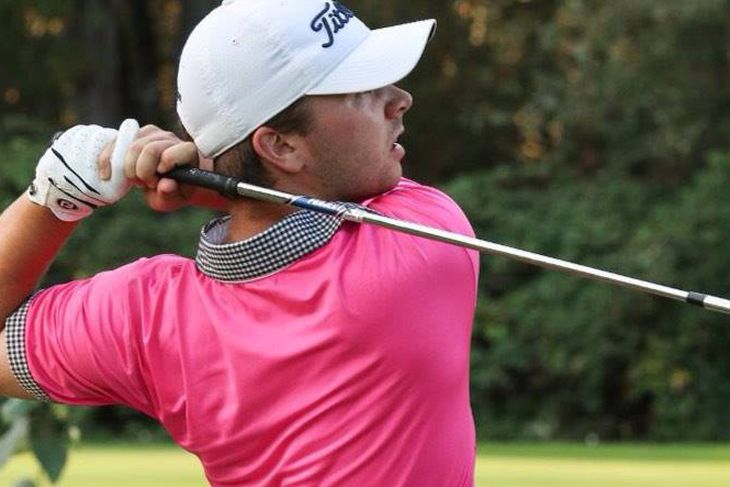
Will Mansfield first realized he was attracted to men after a sleepover with some friends. Now, after playing in the Little League World Series and finding golf, he will be one of the very rare out golfers as he hits the links for Occidental College in Los Angeles.
I was scared. I texted my ex-girlfriend again.
"Are you sure I should do this?"
She replied: "Of course! If you feel ready then you should."
I buried my head in my pillow, what would everyone think of me? Knowing I wouldn't have the courage to move the mouse over the "post" button and click it at the same time, I had pre-positioned it so I was just a click away from sharing my secret with the world. With my head still buried, I reached out and found the mouse. There's no turning back now, I thought.
I quickly clicked to place my status on Facebook and recoiled into the fetal position, in fear of what could happen.
I was now openly bisexual.
---
If you had asked me when I was a 5- or 6-year-old if I thought I would ever be something other than straight, I would've given you a strange look. First, I didn't really have a concept of sexuality; And second, I had much more important things in my life, like aspirations of being a baseball star.
I loved baseball more than anything. I would pitch along with Roger Clemens and hit homeruns with Barry Bonds whenever they were on TV. I lived and breathed baseball.
By the time I was 12, baseball was starting to get more serious. I played in the Little League World Series and was also looking for a competitive team. I was also interested in girls - Like on most teams, conversations revolved mostly around sports and girls.
I was just like the rest of the guys on my team until a sleepover with some friends one night. At first I didn't think about it at all but it stayed there in the back of my mind, nagging at me. I realized I liked "that" sleepover. Eventually, probably from me saying something, word got out to my baseball team that I had done some "stuff" with other guys. No one judged me for it and it wasn't an issue. However, I still did not make the connection to my sexuality.
What happened did not make me gay or bisexual, I thought, it just kind of was something that happened.
When I reached age 14-15, baseball was getting serious. I was working hard to get in shape and training to play in national showcases. It was around that time that I had my first real girlfriend. Between the two, plus entering high school, my sexuality kind of fell away and I forgot about it for a little while. It was there but it didn't matter.
Slowly though, even with all the distractions, it crept out of the dark pit I had left it in. I started noticing guys more and more and it was becoming harder to fight the feeling that I might not be straight. So, I told the person I trusted most: my girlfriend. In hindsight this was a terrible idea because I wasn't ready and it was a big shock to her. She wasn't homophobic at all, just shocked. Nonetheless, I backtracked as well as I could and buried my feelings. I wasn't ready to be open about my apparent bisexuality; I still hardly believed it myself.
Eventually she and I broke up and I reached a low emotional point. It wasn't depression. I just didn't know who I was, and I had lost someone I really felt I loved. I was just going through the motions and didn't really care about anything.
I realized I couldn't hide from myself any longer; I had these feelings for guys that were not going away. It was not acceptance, but it was a step in the right direction.
I also found a new passion in the form of golf.
When I found the golf team, I felt like I finally found "my people." I fit in well with the social group and had plenty of potential. After my first golf season my sophomore year in high school, I was hooked. Everything was going well in my life and I felt really happy - Everything except coming to terms with my bisexuality.
The summer between my sophomore and junior year I found another girl and got more serious about golf. Baseball was beginning to slip. Despite interest from various colleges, I just wasn't interested. It was hard to let go of a sport I had loved for so long, but I just didn't want to play at such a competitive, national level anymore. I enjoy playing for my high school team, but after this season I'll be just a fan (Go Mariners!).
A few months into my new relationship I just finally accepted I was bisexual. I couldn't get rid of the feelings I had and was kind of fed up with the internal struggle. Even though I accepted myself, I was deathly afraid to tell anyone. I didn't know what people would think of me and had a reputation I wanted to protect.
After I accepted myself, the first step was telling other people. One of the first people I told was my girlfriend. I trusted her. It is one of the hardest things I have ever done. When I finally muttered the words, paralyzed with fear, she supported me. There was no change, I was no different and she realized that and loved me all the same. Her reaction gave me hope that everything would work out, that maybe I wouldn't be ostracized.
As the year rolled into summer I slowly told a few more people. Each time they said they supported me and it didn't change anything. I was so excited I could've exploded! It was a slow process and I was beginning to become more comfortable with the idea of being totally open.
By National Coming Out Day - Oct. 11, 2014 - I knew what had to be done. I was scared but determined. When I posted on Facebook I had no idea what would happen. It was late at night so I went to sleep. Worrying wasn't going to change anything:
"It is National Coming Out Day today so I have something to tell all of you wonderful friends: I am bisexual. It is an exciting thing to say but a scary thing to say as well. I just finally realized that I need to be more true to myself. Thank you to everyone who has been supportive."
Waking up to dozens of "likes" on my status was exhilarating and flooded me with relief. When I saw that, I knew everything would be okay.
It was a little odd coming out publicly like that to friends first, and only then telling my parents. It did create some awkward conversations. In the end though I needed the support from my peers to tell my parents, and even then I could only tell them through a letter. When I did tell them though, they supported me just like everyone else had.
It is not easy being bisexual. Often times we are labeled as the "gay still in the closet" or the "straight person who wants attention." That's just not the way it is. I know that I feel an attraction to both genders, but sometimes even that gets convoluted. Some days I wake up feeling attracted to one gender much more than the other. As I get older and begin to learn more about my feelings it may become clearer, but for now I am happy just accepting myself and being open.
I know there are many people like me out there who are too afraid to come out or aren't sure of themselves. I really hope I have inspired someone to find their courage and be who they truly are because it is a liberating experience that I can't quite put into words.
Now I am nearing the second semester of my senior year in high school. I'm totally content. I finished the golf season by qualifying for the spring state tournament and making the All-League First Team.
I also worked hard enough to be invited to play golf at Occidental College next year, and I can't wait to begin that chapter of my life.
Even though I am totally open in my current social group, I am still apprehensive about telling complete strangers on my new team. But, if the support I received from my peers is any indication, I will have nothing to worry about.
Ultimately I am being true to myself, which is all that matters.


/cdn0.vox-cdn.com/uploads/chorus_asset/file/2907726/will_mansfield_good_baseball.0.jpg)
/cdn0.vox-cdn.com/uploads/chorus_asset/file/2907730/will_mansfield_1_good.0.jpg)